How do children with autism learn best? Our researchers work tirelessly to answer that question and advance the most effective, evidence-based methods for teaching children with autism.
2,660+
conference presentations
330+
articles published
175+
BCBAs at NECC
Research to Practice
Since its founding, NECC has been a leader in autism research and evidence-based practice in education and behavior analysis. Beginning with its formal research program in 1978, NECC has advanced the field through influential peer-reviewed studies, university partnerships, and innovative tools such as the Autism Curriculum Encyclopedia® (ACE) and ABAplus®.
Graduate training programs, on-site research facilities, and initiatives including the John and Diane Kim Autism Institute reflect NECC’s ongoing commitment to advancing science, developing professionals, and improving outcomes for children with autism.

Recently Published
Two studies were recently published in peer-reviewed scientific journals.
In Perspectives in Infant Mental Health (Vol. 33 No. 3, December 2025, p.6-13), Dr. Becky MacDonald, PhD, Kathryn Couger, MA, MS, and Victoria Yarzebski, MSEd, MS published a clinical paper, “Prodromal Identification and Intervention in Autism Spectrum Disorder”.
Read article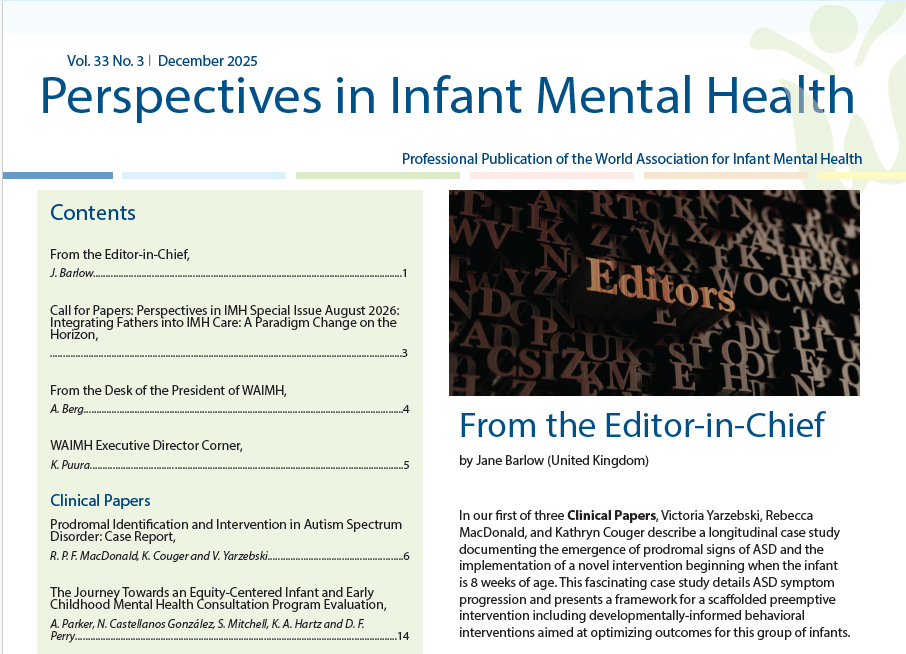
The Journal of Applied Behavior Analysis (Spring 2026, vol. 59, issue 2) published the research of Dr. Eileen Roscoe, PhD, BCBA-D, (NECC’s Director of Behavior Analytic Research) and Lauren Rae, MS, BCBA (Professional Development Coordinator) on “Component analysis of a self-monitoring intervention for increasing task engagement for individuals with developmental disabilities”.
Read article
NECC Published Studies
2025
Ahearn, W.H. (2025). I am a behavior analyst and an advocate for ABA: Are you? Perspectives on Behavior Science. https://doi.org/10.1007/s40614-025-00470-4
Briere, M.L., Janetzke, S., Fleck, C.R., & Bourret, J.C. (2025). Differential reinforcement without escape extinction to teach cooperation with nasal swab tests. Journal of Applied Behavior Analysis. https://DOI: 10.1002/jaba.70000
Burren, K.F., & Dickson, C.A. (2025). Matching visual stimuli: Does similarity matter? The Experimental Analysis of Human Behavior Bulletin.
Burren, K.F., & Dickson, C.A. (2025). Meta-analysis of function-based behavioral treatment outcomes in acquired brain injury rehabilitation. Behavioral Interventions.
MacManus, C., & Ahearn, W.H. (2025). A pursuit of the generalization of DRA treatment effects. In D. Mitteer (ed.), Toward Durability and Generalization when Supporting Individuals with Autism. Springer Nature.
Slaton, J.D., Hanley, G.P., Gage, E.K., Ruppel, K.W., Raftery, K.J., Clark, M.K., & Carusol, C.M. (2025). Skill-based treatment of interfering stereotypy. Journal of Applied Behavior Analysis. DOI: 10.1002/jaba.70023
Verriden, A.L., Roscoe, E.M., Rousseau, K.R., Kalles, J., & Cook, J. (2025). Competition and preference in the treatment of automatically reinforced challenging behavior. Journal of Applied Behavior Analysis, 8,. http://doi.org/10.1002/jaba.70016
Zuchora, A., & Dickson, C.A. (2025) Measuring electrodermal activity in the context of shifting reinforcement contingencies. Experimental Analysis of Human Behavior Bulletin,36, 59-72.
2024
Abdalla, F., Mahfoudhi, A., Shaalan, S., Almarri, R., Aldousari, M., & Alseedeqi, H. (2024). Lexical development in Kuwaiti Arabic in typically developing children and late talkers. Journal of Communication Disorders, 110, 106432. https://doi.org/10.1016/j.jcomdis.2024.106432
Hempkin, N., Sivaraman, M., & Barnes-Holmes, D. (2024) Deictic Relational Responding and Perspective-Taking in Autistic Individuals: A Scoping Review. Perspectives on Behavior Science. Advance online publication. https://doi.org/10.1007/s40614-024-00397-2
Rosenzweig, J.L., Li Volsi, C.A., de Man, T., & Ahearn, W.H. (2024). Examining procedural variations of delivering competing stimuli in the treatment of stereotypy. Behavior Modification, 1-29. https://doi.org/10.1177/01454455241232574
Yarzebski,V., & Dickson, C.A. (2024). Teaching parents to use graduated guidance using video modeling. Behavior Analysis in Practice. https://doi.org/10.1007/s40617-024-00969-3
2023
Cividini-Motta, C., McNaul, H., Mandel, N.R., Rojas, A., & Ahearn, W.H. (2023). Automatic reinforcement. In J.L. Matson (ed.), Handbook of Applied Behavior Analysis: Integrating Research into Practice. Springer Nature.
Farber, R.S. & Dickson, C.A. (2023). The classification and utility of the differential observing response. Behavior Analysis: Research and Practice. https://doi.org/10.1037/bar0000272
Fleck, C.R., Bourret, J.C., & Jehle, E.R. (2023). Concurrent schedules of differential reinforcement of alternative behavior in the treatment of problem behavior without extinction. Journal of Applied Behavior Analysis, 56(3), 623-637. https://doi.org/10.1002/jaba.987
Fredericks, B.M., Sze Ya Sng, S., Parry-Cruwys, D.E., & MacDonald, R.P.F. (2023). Teaching joint attention using social reinforcers: Assessing generalization and maintenance of effects using multiple exemplar training. Journal of Autism and Developmental Disorders, 53, 1117-1129.
Goldberg, N., Roscoe, E.M., Newman, Z., & Sedano, A. (July 2023). Single- vs. combined- category preference assessments of edible, leisure, and social interaction. Journal of Applied Behavior Analysis. https://doi.org/10.1002/jaba.1007
Johnson, C. (2023). Chapter 7: Choice and preference assessments. In J. L. Matson (ed.), Handbook of ABA for Children with Autism: Clinical Guide to Assessment and Treatment. Springer Nature.
Johnson, C., & Graff, R.B. (2023). Stimulus preference assessments. In J.L. Matson (ed.), Handbook of Applied Behavior Analysis: Integrating Research into Practice. Springer Nature.
LeBlanc, L. A., Dickson, C. A., Pilgrim, C., Ross-Page, D., Sundberg, D., & Van Hoover, C. (2023). The Women in Behavior Analysis Hall of Fame: Description and 2021 inductees. Behavior Analysis in Practice.
Mead Jasperse, S. C., Kelly, M. P., Ward, S. N., Fernand J. K., Joslyn, P. R. & van Dijk, W. (2023) Consent and Assent Practices in Behavior Analytic Research. Behavior Analysis in Practice. Advance online publication. https://doi.org/10.1007/s40617-023-00838-5
Roscoe, E. M., Hall, V. A., McVarish, A. E., & Cornaglia, R. B. (2023). Increasing leisure-item engagement in individuals with autism. Behavioral Interventions, 1– 24. https://doi.org/10.1002/bin.1981
Steinhauser, H.M.K., & Ahearn, W.H. (2023). Response interruption and redirection. In J.L. Matson (ed.), Handbook of Applied Behavior Analysis: Integrating Research into Practice. Springer Nature.
Steinhauser, H.M.K., & Ahearn, W.H. (2023). Response interruption and redirection. In P. Sturmey, R. Lang, & J.K. Luiselli (eds.), Lifespan Treatment of Autism Spectrum Disorder: An Evidence-Based Guide for Professionals and Families. Oxford University Press.
Walters, K.M., & Dickson, C.A. (2023). Response effort and resurgence. Journal of the Experimental Analysis of Behavior, 119 (2), 373-391. https://doi.org/10.1002/jeab.835
2022
Cividini-Motta, C., MacNaul, H., Steinhauser, H. M. K., & Ahearn, W. (2022). Response interruption and redirection. In J.B. Leaf, J. Cihon, J. Ferguson, & M.J. Weiss (eds.), Handbook of applied behavior analysis interventions for Autism. Springer Nature.
Dufek, S., MacDonald, R.P.F., Parry-Cruwys, D., & Peterson, P. (2022). Chapter 35: Behavioral treatments. In Textbook of Autism Spectrum Disorders, 2nd Edition. American Psychiatric Association Publishing, Washington, DC.
Looi, I., & Johnson, C. (2022). Examining the effects of behavioral skills training on social praise delivery in Malaysian classrooms. Journal of International Special Needs Education.
Mahfoudi, A., & Shaalan, S. (2022). Introduction to special issue: Speech-language therapy services in the Arab world and the diaspora. Arab Journal of Applied Linguistics, 7(01).
Moore, K., Bullard, A., Sweetman, G., & Ahearn, W.H. (2022). Assessing and treating anxiety in individuals with autism. Behavior Modification 46 (6), 1279-1313. https://doi.org/10.1177/01454455211051678.
Murray, C.M., Baruni, R.R., Kelly, M.P., Sheridan, D.J., & Seaver, J.P. (2022). Increasing novel toy play actions in children with autism spectrum disorder and intellectual disabilities. International Journal of Play. Taylor & Francis Online. https://www.tandfonline.com/doi/full/10.1080/21594937.2022.2118206
Rose, J., MacDonald, J., Parry-Cruwys, D., & MacManus, C. (2022). Mitigating racial inequity by addressing racism in the criminal justice system: A behavior analytic approach. Behavior Analysis in Practice, 15, 635-641.
2021
Cividini-Motta, C., MacNaul, H., Mandel, N., Rojas, A., & Ahearn, W. (2021). Automatic reinforcement. In J. L. Matson (eds.), Applied Behavior Analysis: A Comprehensive Handbook. Springer Nature.
Griffith, L.S., Roscoe, E.M., & Cornaglia, R.B. (2021). A comparison of brief and extended session duration functional analyses. Journal of Applied Behavior Analysis, 54, 1001-1012. https://doi.org/10.1002/jaba.820
Johnson, C., & Graff, R.B. (2021). Stimulus preference assessments. In J. L. Matson (eds.), Applied Behavior Analysis: A Comprehensive Handbook. Springer Nature.
Khater, M. The relationship between word and non-word repetition and receptive and expressive vocabulary skills in Gulf Arabic speaking children. In Ntelitheos, D. & Leung, T.T. (Eds.) Experimental Arabic Linguistics. John Benjamins Publishing Company. DOI: https://doi.org/10.1075/sal
Kimpel, A., DeQuinzio, J., & Ahearn, W.H. (2021). Review of auditory stimulation as treatment for vocal stereotypy: A discussion of best practices and clinical recommendations. Education and Training in Autism and Developmental Disabilities, 56(4), 409-419.
Morse, C. M. (2021). The leadership of employees transitioning from colocated to dispersed teams: A qualitative case study. (Publication No. 28643905) [Doctoral dissertation, The Chicago School of Professional Psychology]. ProQuest Dissertations & Theses Global.
Newman, Z.A., Roscoe, E.M., Errera, N.A., & Davis, C.A. (2021). Noncontingent reinforcement: Arbitrary versus maintaining reinforcers for escape-maintained problem behavior. Journal of Applied Behavior Analysis, 54, 984-1000. https://doi.org/10.1002/jaba.821
Shaalan, S., Egan, K., Gould, D.D., & Olsen, P. An exploratory longitudinal study of vocabulary development in bilingually exposed children with autism spectrum disorder (ASD) in the United Arab Emirates. In Ntelitheos, D. & Leung, T.T. (Eds.) Experimental Arabic Linguistics. John Benjamins Publishing Company. DOI: https://doi.org/10.1075/sal
Solano, A. S., Reeve, S. A., Reeve, K. F., DeBar, R. M., Dickson, C. A., & Milata, E. M. (2021). Comparing matrix sizes when teaching direction following to preschoolers with autism spectrum disorder. Behavioral Interventions, 1– 18. https://doi.org/10.1002/bin.1824
Steinhauser, H.M.K., & Ahearn, W.H. (2021). Response interruption and redirection. In J. L. Matson (Ed.), Applied Behavior Analysis: A Comprehensive Handbook. Springer Nature.
Steinhauser, H.M.K., Ahearn, W.H., Foster, R.A., Jacobs, M., Doggett, C.G., & Goad, M.S. (2021). Examining stereotypy in naturalistic contexts: Differential reinforcement and context-specific redirection. Journal of Applied Behavior Analysis, 54 (4), 1420-1436. https://doi.org/10.1002/jaba.847
Ward, S.N., Hanley, G.P., Warner, C.A., & Gage, E.E. (2021). Does teaching an omnibus mand preclude the development of specifying mands? Journal of Applied Behavior Analysis, 54, 248-269. https://doi.org/10.1002/jaba.784
2020
Ahearn, W.H. (2020). Response interruption/redirection. In Volkmar (Ed.) Encyclopedia of Autism Spectrum Disorders. Springer.
Bakhsh, M. (2020). Language practices in the UAE: Perspectives of Arab mothers of children with Autism Spectrum Disorder. Arab Journal of Applied Linguistics, 5, 55-83.
Bonfonte, S.A., Bourret, J.C., & Lloveras, L.A. (2020). Comparing the reinforcing efficacy of tokens and primary reinforcers. Journal of Applied Behavior Analysis, 53(3), 1593-1605. https://doi.org/10.1002/jaba.675
Cividini-Motta, C., Ahearn, W.H., Fish, L., Priehs, J., & Moore, K. (2020). Reducing public masturbation in individuals with ASD: An assessment of response interruption procedures. Behavior Modification, 44(3), 429-448.
Gauthier, K.A., Ahearn, W.H., & Colón, C.L. (2020). Further evaluation of treatment integrity for response interruption and redirection. Behavioral Interventions, 35, 571-580. https://doi.org/10.1002/bin.1738
Glodowski, K.R., Bourret, J.C., Ivy, J.W., Seaver, J.P., Jackson, J., Stine, J.M., & Nuzzolilli, A.E. (2020). A comparison of token and tandem schedules of reinforcement on response patterns for adolescents with autism. Behavioral Interventions, 35(1), 25-37. https://onlinelibrary.wiley.com/doi/abs/10.1002/bin.1704
Hedquist, C. B., & Roscoe, E. M. (2020). A comparison of differential reinforcement procedures for treating automatically reinforced behavior. Journal of Applied Behavior Analysis, 53, 284-295. https://doi.org/10.1002/jaba.561
Johnson, C., Iversen, I., Kenyon, P., Holth, P., & de Souza, D.G. (2020). Murray Sidman: A life of giving. Journal of Applied Behavior Analysis, 539(3), 1290-1298. https://doi.org/10.1002/jaba.718
Leif, E.S., Roscoe, E.M., Ahearn, W.H., Rogalski, J.P., & Morrison, H. (2020). Increasing item engagement and decreasing automatically reinforced problem behavior within a modified competing stimulus assessment. Journal of Applied Behavior Analysis, 53(3), 1638-1659. https://doi.org/10.1002/jaba.695
McConnell, K.L, Sassi, J.L., Carr, L., Szalwinski, J., Courtemanche, A., Njie-Jallow, F., & Cheney, W.R. (2020). Functional analysis and generalized treatment of disruptive behavior during dental exams. Journal of Applied Behavior Analysis, 53(4), 2233-2249. https://doi.org/10.1002/jaba.747
Milata, E.M., Reeve, S.A., Reeve, K.F., & Dickson, C.A. (2020). A blueprint for general-case procedures illustrated by teaching adolescents with autism spectrum disorder to use a chip-debit card. Behavioral Interventions, 1-26. https://doi.org/10.1002/bin.1719
Murray, C.M., Baruni, R.R., Kelly, M.P., Sheridan, D.J., & Seaver, J.P. (2022): Increasing novel toy play actions in children with autism spectrum disorder and intellectual disabilities, International Journal of Play, https://www.tandfonline.com/doi/abs/10.1080/21594937.2022.2118206
Olsen, P. M. & Kelly, M. P. (2020). Chapter 8. Applied behavior analysis with Arab-Muslim populations: The importance of cultural awareness. In B. M. Conners & S. T. Capell (Eds.) Multiculturalism and Diversity in Applied Behavior Analysis: Bridging Theory and Application (pp. 140-163). Oxfordshire, United Kingdom: Routledge Taylor & Francis Group.
Rogalski, J.P., Roscoe, E. M., Fredericks, D. W., & Mezhoudi, N. (2020). Negative reinforcer magnitude manipulations for treating escape-maintained problem behavior. Journal of Applied Behavior Analysis, 53, 1514-1530. https://doi.org/10.1002/jaba.683
Seaver, J., & Bourret, J.C. (2020). Producing mands in concurrent operant environments. Journal of Applied Behavior Analysis, 53, 366-384. https://doi.org/10.1002/jaba.592
Shaalan, S. (2020). Nonword repetition skills in Gulf Arabic speaking children with Developmental Language Disorder (DLD). Journal of Speech, Language, and Hearing Research, 63, 3700-3714. https://doi.org/10.1044/2020_JSLHR-20-00040
Stuesser, H. A., & Roscoe, E. M. (2020). An evaluation of differential reinforcement with stimulus fading as an intervention for medical adherence. Journal of Applied Behavior Analysis, 53(3), 1606-1621. https://doi.org/10.1002/jaba.685
Wiggins, H.C., & Roscoe, E. M. (2020). Evaluation of an indirect assessment for identifying tasks for functional analysis. Journal of Applied Behavior Analysis, 53, 997-1012. https://doi.org/10.1002/jaba.656
2019
Berkman, S., Roscoe, E.M., & Bourret, J.C. (2019). Comparing self-directed methods for training staff to create graphs using GraphPad Prism. Journal of Applied Behavior Analysis, 52:1, 188-204.
Castelluccio, N., & Johnson, C. (2019). Using stimulus preference assessments to identify preferred break environments. Journal of Applied Behavior Analysis, 52, 772-787.
Colón, C.L., & Ahearn, W.H. (2019). An analysis of treatment integrity of response interruption and redirection. Journal of Applied Behavior Analysis, 52(2), 337-354.
Fleck, C. R., Bourret, J. B., & Lloveras, L.A. (2019). Increasing meal consumption in individuals with competing protective equipment. Behavioral Interventions, 34 (4), 487-494. DOI:10.1002/bin.1681
MacDonald, R.P.F., Parry-Cruwys, D., & Peterson, P. (2019). Behavioral treatment for autism. In E. Hollander, D. Fein, & R. Hagerman (Eds.), Autism Spectrum Disorders-DSM-5. Washington, DC: American Psychological Association.
Szalwinski, J., Thomason-Sassi, J.L., Moore, E., & McConnell, K. (2019). Effects of decreasing intersession interval duration on graduated exposure treatment during simulated routine dental care. Journal of Applied Behavior Analysis, 52, 205-226.
Verriden, A., & Roscoe, E.M. (2019). An evaluation of a punisher assessment for decreasing automatically reinforced problem behavior. Journal of Applied Behavior Analysis, 52:1, 205-226.
2018
Blair, B.J., Weiss, J.S., & Ahearn, W.H. (2018). A comparison of task analysis training procedures. Education and Treatment of Children, 41 (3), 357-370.
Cohen, S., Fulcher, B.D., Rajaratnam, S.M.W., Conduit, R., Sullivan, J.P., St. Hilaire, M.A., Phillips, A.J., Loddenkemper, T., Kothare, S.V., McConnell, K., Ahearn, W.H., Braga-Kenyon, P., Shlesinger, A., Potter, J., Bird, F., Cornish, K.M., & Lockley, S.W. (in press). Sleep patterns predictive of daytime challenging behavior in individuals with low-functioning autism. Autism Research, 11(2), 391-403.
Livingston, C., & Graff, R.B. (2018). Further evaluation of the use of preference categories to identify novel reinforcers: A systematic replication. Behavioral Interventions, 33(2), 173-184.
Maynihan, C. B., Murray, C. M., Baruni, R. R., Sheridan, D. J., & Kelly, M. P. (2018). A review of lag schedules of reinforcement to increase variation in play skills for children with autism spectrum disorder. Frontiers in Human Neuroscience. Conference Abstract: 3rd International Conference on Educational Neuroscience. doi: 10.3389/conf.fnhum.2018.225.00029
MacDonald, R.P.F., & Langer, S. (2018). Stimulus control procedures for teaching discrimination skills to children with autism spectrum disorder. Bethesda, MD; Woodbine Press.
Olson, P.M., Bailey, L.S., & Gould, D.D. (2018). Using video-modelling to teach culture-specific dressing skills. European Journal of Behavior Analysis. DOI: 10.1080/15021149.2018.1541205
2017
Ahearn, W.H. (2017). Response interruption/redirection. In F. Volkmar (Ed.) Encyclopedia of Autism Spectrum Disorders. New York: Springer.
Ahearn, W.H. (2017). Chapter 16: Licensure and certification. In Luiselli (Ed.) Applied Behavior Analysis Advanced Guidebook, (pp. 367-388). Cambridge, MA: Academic Press.
Cividini-Motta, C., Scharrer, N., & Ahearn, W.H. (2017). An assessment of procedures to teach echoic responding. The Analysis of Verbal Behavior, (33), 41-63. doi:10.1007/s40616-016-0069-z
Cohen, S., Fulcher, B.D., Rajaratnam, S.M.W., Conduit, R., Sullivan, J.P., St. Hilaire, M.A., Phillips, A.J., Loddenkemper, T., Kothare, S.V., McConnell, K., Ahearn, W.H., Braga-Kenyon, P., Shlesinger, A., Potter, J., Bird, F., Cornish, K.M., & Lockley, S.W. (2017). Behaviorally-determined sleep phenotypes are robustly associated with adaptive functioning in individuals with low functioning autism. Scientific Reports, 7: 14228 | DOI:10.1038/s41598-017-14611-6
Farber, R.S., Dickson, C.A., & Dube, W.V. (2017). Reducing overselective stimulus control with differential observing responses. Journal of Applied Behavior Analysis, 50, 87-105.
Kautz, M.E., DeBar, R.M., Vladescu, J.C., & Graff, R.B. (2017). A further evaluation of choice of task sequence. The Journal of Special Education, 1-13. doi/10.1177/0022466917735655
MacDonald, R.F., Parry-Cruwys, D., & Peterson, P. (2017). Philosophy and common components of early intensive behavioral interventions. In J L. Matson, (Ed.), Handbook of Autism Treatments, Springer Publisher.
Shaalan, S. (2017). Reliability and validity of four Arabic language tests: A comparison of performance of Qatari school-aged children with and without language impairment. Arab Journal of Applied Linguistics, 2, 20-48.
Soreth, M.E., Dickson, C.A., & Terry, C.M. (2017). In Memoriam: Maria del Rosario Ruiz (1950 – 2017). The Behavior Analyst. https://doi.org/10.1007/s40614-017-0131-8
2016
Ahearn, W.H. (2016). What is best practice for treating automatically reinforced stereotypic behavior? APBA Reporter, 56. http://www.apbahome.net/newsletter.php?nid=56&aid=1903
Ahearn, W.H. (2016). The New England Center for Children: Applied behavior analysis for treating all levels of ASD severity. In R.G. Romanczyk & J. McEachin (Eds), Comprehensive Models of Autism Spectrum Disorder. New York: Springer.
Bancroft, S.L., Thompson, R.H., Peters, L.C., Dozier, C.L., & Harper, A.M. (2016). Behavioral variability in the play of children with autism and their typically developing peers. Behavioral Interventions, 31, 107-119.
Farber, R.S., Dube, W.V., & Dickson, C.A. (2016). A sorting-to-matching method to teach compound matching to sample. Journal of Applied Behavior Analysis, 49, 294-307.
Verriden, A.L., & Roscoe, E.M. (2016). A comparison of preference assessment methods. Journal of Applied Behavior Analysis, 49, 265-281.
2015
Ahearn, W.H. (2015). What are “Best Practices?” APBA Reporter, 53.
Ahearn, W.H., Parry-Cruwys, D., Toran, T., & MacDonald, J. (2015). Stimulus salience in autism: A social learning disorder. In F. DiGennaro Reed (Ed.), “Autism Service Delivery: Bridging the Gap between Science and Practice.” New York: Springer.
Ciccone, F.J., Graff, R.B., & Ahearn, W.H. (2015). Increasing the efficiency of paired-stimulus preference assessments by identifying categories of preference. Journal of Applied Behavior Analysis48, 221-226.
Dube, W. V., Farber, R., & Dickson, C. A. (2015). Remediation of stimulus overselectivity with differential observing responses: Determining the level of instructional support [Abstract]. Proceedings of the 48th Annual Gatlinburg Conference on Research and Theory in Intellectual and Developmental Disabilities, 24. http://vkc.mc.vanderbilt.edu/gatlinburg/Files/2015_GC_Poster_Abstracts.pdf, p. 42.
MacDonald, J., & Ahearn, W.H. (2015). Teaching observational learning to children with autism. Journal of Applied Behavior Analysis, 48, 800-816.
MacDonald, R.P.F., Dickson, C.A., Martineau, M., & Ahearn, W.H. (2015). Prerequisite skills that support learning through video modeling. Education and Treatment of Children, 38, 33-47.
MacManus, C., MacDonald, R.P.F., & Ahearn, W.H. (2015). Teaching and generalizing pretend play in children with autism using video modeling and matrix training. Behavioral Interventions, 30, 191-218.
Moore, K.M., Cividini-Motta, C., Clark, K.M., & Ahearn, W.H. (2015). Sensory integration as a treatment for automatically-maintained stereotypy. Behavioral Interventions, 30, 95-111.
Pauwels, A.A., Ahearn, W.H., & Cohen, S.J. (2015). Recombinative generalization of tacts through matrix training with individuals with autism spectrum disorder. The Analysis of Verbal Behavior, 31, 200–214.
Rooker, G.W., DeLeon, I.G., Borrero, C.S.W., Frank-Crawford, M.A., & Roscoe, E.M. (2015). Reducing ambiguity in the functional assessment of problem behavior. Behavioral Interventions, 30, 1-35.
Roscoe, E.M., Phillips, K.M., Kelly, M.A., Farber, R., & Dube, W.V. (2015). A statewide survey assessing practitioners’ use and perceived utility of functional assessment. Journal of Applied Behavior Analysis, 48, 830-844.
Roscoe, E.M., Schlichenmeyer, K.J., & Dube, W.V. (2015). Functional analysis of problem behavior: A systematic approach for identifying idiosyncratic variables. Journal of Applied Behavior Analysis, 48, 289-314.
2014
Ahearn, W.H. (2014). Licensing applied behavior analysts in Massachusetts. APBA Reporter, 47.
Carey, M.K., & Bourret, J.C. (2014). Effects of data sampling on graphical depictions of learning. Journal of Applied Behavior Analysis, 47, 749-764.
DeLeon, I.G., Graff, R.B., Frank-Crawford, M.A., Rooker, G.W., & Bullock, C.E. (2014). Reinforcement arrangements for learners with Autism Spectrum Disorder. In J. Tarbox, D.R. Dixon, P. Sturmey, & J.L. Matson (Eds.), Handbook of Early Intervention for Autism Spectrum Disorders: Research, Policy, and Practice. New York: Springer.
Dickson, C.A., MacDonald, R.P.F., Mansfield, R., Guilhardi, P., Johnson, C., & Ahearn, W.H. (2014). Social validation of the New England Center for Children-Core Skills Assessment. Journal of Autism and Developmental Disorders, 44, 65-74.
Graff, R. B. (2014). A review of Radical Behaviorism for ABA Practitioners, by James M. Johnston. Association for Professional Behavior Analysts Reporter, #50.
Johnson, C., Meleshkevitch, O., & Dube, W.V. (2014). Merging separately established stimulus classes with outcome-specific reinforcement. Journal of the Experimental Analysis of Behavior, 101, 38-50.
Kelly, M.A., Roscoe, E.M., Hanley, G.P., & Schlichenmeyer, K. (2014). Evaluation of assessment methods for identifying social reinforcers. Journal of Applied Behavior Analysis, 47, 113-135.
MacDonald, R., Parry-Cruwys, D., Dupere, S., & Ahearn, W. H. (2014). Assessing progress and outcome of early intensive behavioral intervention for toddlers with autism. Research in Developmental Disabilities, 35, 3632-3644.
McKay, J.A., Weiss, J.S., Dickson, C.A., & Ahearn, W.H. (2014). Comparison of prompting hierarchies in the acquisition of leisure and vocational skills. Behavior Analysis in Practice, 7, 91-102.
Seaver, J.L., & Bourret, J.C. (2014). An evaluation of response prompts for teaching behavior chains. Journal of Applied Behavior Analysis, 47, 777-792.
Sweeney, M.M., Moore, K., Shahan, T.A., Ahearn, W.H., Dube, W.V., & Nevin, J.A., (2014). Modeling the effects of sensory reinforcers on behavioral persistence with alternative reinforcement. Journal of the Experimental Analysis of Behavior, 102, 252-266
2013
Cividini-Motta, C., & Ahearn, W.H. (2013). Effects of two variations of differential reinforcement on prompt dependency. Journal of Applied Behavior Analysis, 46, 640-650.
Dozier, C. L., Iwata, B. A., Wilson, D. M., Thomason-Sassi, J. L., & Roscoe, E. M. (2013). Does supplemental reinforcement of stereotypy facilitate extinction? Journal of Applied Behavior Analysis, 46, 242-255.
Dupere, S., MacDonald, R.P.F., & Ahearn, W.H. (2013). Using video modeling with substitutable loops to teach varied play to children with autism. Journal of Applied Behavior Analysis, 46, 662-668.
Hanney, N.M., Jostad, C.M., LeBlanc, L.A., Carr, J.E., & Castile, A.J. (2013). Intensive behavioral treatment of urinary incontinence of children with autism spectrum disorders: An archival analysis of procedures and outcomes from an outpatient clinic. Focus on Autism and Other Developmental Disabilities, 28, 26-31.
Iwata, B.A., DeLeon, I.G., & Roscoe, E.M. (2013). Reliability and validity of the Functional Analysis Screening Tool. Journal of Applied Behavior Analysis, 46, 271-284.
Kuroda, T., Cançado, C.R.X., Lattal, K.A., Elcoro, M., Dickson, C.A., & Cook, J.E. (2013). Combinations of response-reinforcer relations in periodic and aperiodic schedules. Journal of the Experimental Analysis of Behavior, 99, 199-210.
MacDonald, J.M., Ahearn, W.H., Parry-Cruwys, D., Bancroft, S., & Dube, W.V. (2013). Persistence during extinction: Examining the effects of continuous and intermittent reinforcement on problem behavior. Journal of Applied Behavior Analysis, 46, 333-338.
MacDoald, R.P.F. (Summer 2013). Teaching joint attention curriculum from the ACE® Curriculum. Autism News of Orange County, 7, 10-13.
Neidert, P.L., Iwata, B.A., Dempsey, C.M., & Thomason-Sassi, J.L. (2013). Latency of response during the functional analysis of elopement. Journal of Applied Behavior Analysis, 46, 312-316.
Querim, A.C., Iwata, B.A., Roscoe, E.M., Schlichenmeyer, K.J., Ortega, J.V., & Hurl, K.E. (2013). Functional analysis screening for problem behavior maintained by automatic reinforcement. Journal of Applied Behavior Analysis, 46, 47-60.
Roscoe, E.M., Iwata, B.A., & Zhou, L. (2013). Assessment and treatment of chronic hand mouthing. Journal of Applied Behavior Analysis, 46, 181-198.
Schlichenmeyer, K.J., Roscoe, E.M., Rooker, G.W., Wheeler, E.E., & Dube, W.V. (2013). Idiosyncratic variables affecting functional analysis outcomes: A review (2001-2010). Journal of Applied Behavior Analysis, 46, 339-348.
Thomason-Sassi, J.L., Iwata, B.A., & Fritz, J.N. (2013). Therapist and setting influences on functional analysis outcomes. Journal of Applied Behavior Analysis, 46, 79-8.
2012
Ahearn, W.H., & Tiger, J.H. (2012). Behavioral approaches to the treatment of autism. In G. Madden (Ed.), APA Handbook of Behavior Analysis, Vol. 2: Translating Principles into Practice. Washington, DC: American Psychological Association.
Bourret, J.C., Iwata, B.A., Harper, J.M., & North, S.T. (2012). Elimination of position-biased responding in individuals with autism and intellectual disabilities. Journal of Applied Behavior Analysis, 45, 241-250.
Bourret, J.C., & Pietras, C.J. (2012). Visual analysis in single-case research. In G. Madden (Ed.), APA Handbook of Behavior Analysis, Vol. 1: Methods and Principles. Washington, DC: American Psychological Association.
Colón, C.L., Ahearn, W.H., Clark, K.M., & Masalsky, J. (2012). The effects of verbal operant training and response interruption and redirection on appropriate and inappropriate vocalizations. Journal of Applied Behavior Analysis, 45, 107-120.
Dube, W.V., Schlichenmeyer, K.J., Grant, E.T., & Roscoe, E.M. (2012). Functional analysis of problem behavior: A systematic approach to the identification of idiosyncratic variables [Abstract]. Proceedings of the 45th Annual Gatlinburg Conference on Research and Theory in Intellectual and Developmental Disabilities, 127.
Finn, H., Miguel, C. F., & Ahearn, W. H. (2012). The emergence of untrained mands and tacts in children with autism. Journal of Applied Behavior Analysis, 45, 265-280.
Graff, R. B., & Karsten, A. M. (2012). Evaluation of a self-instruction package for conducting stimulus preference assessments. Journal of Applied Behavior Analysis, 45, 69-82.
Graff, R. B., & Karsten, A. M. (2012). Assessing preferences of individuals with developmental disabilities: A survey of current practices. Behavior Analysis in Practice, 5(2), 37-48.
Karsten, A.M., Andrade, M., Cividini-Motta, C., Conde, K.A., Donnelly, M.G., McConnell, K., Moore, K., Peters, L., Roberts, K., Stocco, C., Sveinbjornsdottir, B., & Vanselow, N.R. (2012). A review of Behavioral Foundations of Effective Autism Treatment. Behavior Analysis in Practice, 5(1), 47-52.
Vanselow, N.R., & Bourret, J.C. (2012). Online interactive tutorials for creating graphs with Excel 2007 or 2010. Behavior Analysis in Practice, 5(1), 40-46.
2011
Bancroft, S.L., Weiss, J.S., Libby, M.E., & Ahearn, W.H. (2011). A comparison of procedural variations in training behavior chains: Manual guidance, trainer completion, and no completion of untrained steps. Journal of Applied Behavior Analysis, 44, 559-569.
Bloom, S.E., Iwata, B.A., Fritz, J.N., Roscoe, E.M., & Carreau, A.B. (2011). Classroom application of a trial-based functional analysis. Journal of Applied Behavior Analysis, 44, 19-31.
Graff, R. B. (2011). The vaccine-autism hoax: Why didn’t we know sooner? MedHelp, Children’s Health: Information, Symptoms, Treatments, and Resources. Retrieved from: http://www.medhelp.org/child-health/articles/The-Vaccine-Autism-Hoax-Why-Didnt-We-Know-Sooner/116
Graff, R. B., & Larsen, J. (2011). The relation between obtained preference value and reinforcer potency. Behavioral Interventions, 26, 125-133.
Karsina, A.J., Thompson, R.H., & Rodriguez, N.M. (2011). Effects of a history of differential reinforcement on preference for choice. Journal of the Experimental Analysis of Behavior, 95, 189-202.
Keintz, K.S., Miguel, C.F., Kao, B., & Finn, H.E. (2011). Using conditional discrimination training to produce emergent relations between coins and their values in children with autism. Journal of Applied Behavior Analysis, 44, 909-913.
Mahoney, A.M., Miguel, C.F., Ahearn, W.H., & Bell, J. (2011). The role of common motor responses in stimulus categorization by preschool children. Journal of the Experimental Analysis of Behavior, 95, 237-262.
Morrison, H., Roscoe, E.M., & Atwell, A. (2011). An evaluation of antecedent exercise on behavior maintained by automatic reinforcement using a three-component multiple schedule. Journal of Applied Behavior Analysis, 44, 523-541.
Parry-Cruwys, D.E., Neal, C.M., Ahearn, W.H., Wheeler, E.E., Premchander, R., Loeb, M.B., & Dube, W.V. (2011). Resistance to disruption in a classroom setting. Journal of Applied Behavior Analysis, 44, 363-367.
Stocco, C.S., Thompson, R.H., & Rodriguez, N.M. (2011). Restricted interests and teacher presentation of items. Journal of Applied Behavior Analysis, 44, 499-512.
Thomason-Sassi, J.L., Iwata, B.A., Neidert, P.L., & Roscoe, E.M. (2011). Response latency as an index of response strength during functional analyses of problem behavior. Journal of Applied Behavior Analysis, 44, 51-67.
Vanselow, N.R., Thompson, R., & Karsina, A.J. (2011). Data-based decision making: The impact of data variability, training, and context. Journal of Applied Behavior Analysis, 44, 767-780.
2010
Ahearn, W.H. (2010). What every behavior analyst should know about the “MMR causes autism” hypothesis. Behavior Analysis in Practice, 3, 46-50.
Ahearn, W.H. (2010). Do diets effectively treat autism? APBA Reporter, 15.
Ahearn, W.H. (20110). Sidman on aversive control. Behavior and Philosophy, 38, 149-151.
Ahearn, W.H. (2010). Professional issues for pediatric neuropsychologists: Behavioral interventions. In A. Davis (Ed.), Handbook of Pediatric Neuropsychology. New York, NY: Springer Publishing Company. Ahearn, W.H., & Parry-Cruwys, D.E., (2010). [Review of the book “Just give him the whale!”]. Journal of Autism and Developmental Disabilities, 40, 1039-1041.
Dube, W.V., Dickson, C.A., Balsamo, L.M., O’Donnell, K.L., Tomanari, G.Y., Farren, K.M., Wheeler, E.E., & McIlvane, W.J. (2010). Observing behavior and atypically restricted stimulus control. Journal of the Experimental Analysis of Behavior, 94, 297-313.
Dube, W.V., McIlvane, W.J, & Dickson, C.A. (2010). Stimulus overselectivity, observing, and attending in children with intellectual disabilities [Abstract]. Proceedings of the 43rd Annual Gatlinburg Conference on Research and Theory in Intellectual and Developmental Disabilities, 140.
Groskreutz, N. C., Karsina, A. J., Miguel, C. F., & Groskreutz, M. P. (2010). Using complex auditory-visual samples to produce emergent relations in children with autism. Journal of Applied Behavior Analysis, 43, 131-136.
Guilhardi, P., Menez, M., Caetano, M.S., & Church, R.M. (2010). The effect of stimulus discriminability on strategies for learning multiple temporal discriminations. Behavioural Processes, 84, 476-483.
Palechka, G., & MacDonald, R.P.F. (2010). A comparison of the acquisition of play skills using instructor-created video models and commercially available videos. Education and Treatment of Children, 33, 457-doi:10.1353/etc.0.0100.
Pelletier, K., McNamara, B., Braga-Kenyon, P., & Ahearn, W.H. (2010). Effect of video self-monitoring on procedural integrity. Behavioral Interventions, 25, 261-274.
Roscoe, E.M., Kindle, A.E., & Pence, S.T. (2010). Functional analysis and treatment of aggression maintained by preferred conversational topics. Journal of Applied Behavior Analysis, 43, 723-727.
Tereshko, L., MacDonald, R.P.F., & Ahearn, W.H. (2010). Strategies for teaching children with autism to imitate response chains using video modeling. Research in Autism Spectrum Disorders, 4, 479-489.
2009
Bruzek, J.L., Thompson, R.H., & Peters, L.C. (2009). Resurgence of infant caregiving responses. Journal of the Experimental Analysis of Behavior, 92, 327-343.
Chappell, N., Graff, R. B., Libby, M.E., & Ahearn, W. H. (2009). Further evaluation of the effects of motivating outcomes on preference assessment outcomes. Research in Autism Spectrum Disorders, 3, 660-669.
Dube, W. V., Ahearn, W. H., Lionello-DeNolf, K. M., & McIlvane, W. J. (2009). Behavioral momentum: Translational research in intellectual and developmental disabilities. Behavior Analyst Today, 10, 238-253.
Groskreutz, M.P., & Graff, R.B. (2009). Evaluating pictorial preference assessment: The effect of differential outcomes on preference assessment results. Research in Autism Spectrum Disorders, 3, 113-128.
Herscovitch, B., Roscoe, E.M., Libby, M.E., Bourret, J.C., & Ahearn, W.H. (2009). A methodology for identifying precursors to problem behavior. Journal of Applied Behavior Analysis 4,697-702.
Klein, J.L., MacDonald, R.P.F., Vaillancourt, G., Ahearn, W.H., & Dube, W.V. (2009). Teaching discrimination of adult gaze direction to preschool children with autism. Research in Autism Spectrum Disorders, 3, 42-49.
MacDonald, R.P.F., Sacramone, S., Mansfield, R., Wiltz, K., & Ahearn, W.H. (2009). Using video modeling to teach reciprocal pretend play to children with autism. Journal of Applied Behavior Analysis, 42, 43-55.
Miguel, C.F., Clark, K.M., Tereshko, L., & Ahearn, W.H. (2009). The effects of response interruption and redirection and sertraline on vocal stereotypy. Journal of Applied Behavior Analysis, 42, 883-888.
Miguel, C.F., Yang, H.G., Finn, H., & Ahearn, W.H. (2009). Using conditional discrimination training to establish derived textual control in activity schedules with children diagnosed with autism. Journal of Applied Behavior Analysis, 42, 703-709.
Pence, S.T., Roscoe, E.M., Bourret, J.C., & Ahearn, W.H. (2009). Relative contributions of three descriptive methods: Implications for behavioral assessment. Journal of Applied Behavior Analysis, 42, 425-446.
Roscoe, E.M., Rooker, G.W., Pence, S.T., & Longworth, L.J. (2009). Assessing the utility of a demand assessment for functional analysis. Journal of Applied Behavior Analysis, 42, 819-825.
Samaha, A.L., Vollmer, T.R., Borrero, C., Sloman, K., St. Peter Pipkin, C., & Bourret, J.C. (2009). Analyses of response-stimulus sequences in descriptive observations. Journal of Applied Behavior Analysis, 42, 447-468.
Stayer Smeltzer, S., Graff, R. B., Ahearn, W. H., & Libby, M. L. (2009). Effect of choice of task sequence on responding. Research in Autism Spectrum Disorders, 3, 734-742.
2008
Bancroft, S.L., & Bourret, J.C. (2008). Generating variable and random schedules of reinforcement using Microsoft Exceltm macros. Journal of Applied Behavior Analysis, 41, 227-235.
Dube, W. V., MacDonald, R. P. F., Wheeler, E. E., & Ahearn, W. H. (2008). A behavioral interpretative analysis of gaze shift in joint attention initiation: Testing discriminative and reinforcing stimulus functions [Abstract]. Proceedings of the 41st Annual NICHD Gatlinburg Conference on Research and Theory in Intellectual and Developmental Disabilities, 66.
Libby, M.E., Weiss, J.S., Bancroft, S., & Ahearn, W.H. (2008). A comparison of most-to-least and least-to-most prompting on the acquisition of solitary play skills. Behavior Analysis in Practice, 1, 37-43.
MacDonald, R.P.F. (2008). Hey, look, it’s a train! In E.Cipani (Ed.), Triumphs in Early Autism Treatment. New York, NY: Springer Publishing Company.
Moher, C.A., Gould, D.D., Hegg, E., & Mahoney, A.M. (2008). Non-generalized and generalized conditioned reinforcers: Establishment and validation. Behavioral Interventions, 23, 13-28.
Roscoe, E.M., Carreau, A., MacDonald, J., & Pence, S.T. (2008). Further evaluation of leisure items in the attention condition of functional analyses. Journal of Applied Behavior Analysis, 41, 351-364.
Roscoe, E.M., & Fisher, W.W. (2008). Evaluation of an efficient method for training staff to implement stimulus preference assessments. Journal of Applied Behavior Analysis, 41, 249-254.
2007
Ahearn, W.H. (2007). Do vaccines cause autism?: A review of some recent evidence. Retrieved January 24, 2007 from the Cambridge Center for Behavioral Studies website http://www.behavior.org/resource.php?id=309
Ahearn, W.H. (2007). Is eliminating casein and gluten from a child’s diet a viable treatment for autism? In S.J. Judd (Ed.), Autism and Pervasive Developmental Disorders Sourcebook, First Edition. Omnigraphics, Inc. (Reprinted from the Cambridge Center for Behavioral Studies website http://www.behavior.org/autism/index.cfm?page=http%3A//www.behavior.org/autism/autism_ahearn_glute n.cfm.
Ahearn, W.H., Clark, K.M., MacDonald, R.P.F., & Chung, B.I. (2007). Assessing and treating vocal stereotypy in children with autism. Journal of Applied Behavior Analysis, 40, 263-275.
Ahearn, W.H., MacDonald, R.P.F., Graff, R.B., & Dube, W.V. (2007). Behavior analytic teaching procedures: Basic principles, empirically derived practices. In P. Sturmey & A. Fitzer (Eds.), Autism Spectrum Disorders: Applied Behavior Analysis, Evidence, and Practice. Austin, TX: Pro-Ed.
Ciccone, F.J., Graff, R.B., & Ahearn, W.H. (2007). Long-term stability of edible preferences in individuals with developmental disabilities. Behavioral Interventions, 22, 223-228.
Graff, R. B., Morrison, H., Cerrone, T. M., & Toran, T. (2007). Motivating individuals with autism with idiosyncratic speech: Identifying reinforcers by comparing verbal and tangible preference assessments. In W. O’Neill (Ed.), Motivation of Health Behavior (pp. 15-29). Hauppauge, NY: Nova Science Publishers, Inc.
Gutierrez, A., Vollmer, T.R., Dozier, C.L., Borrero, J.C., Rapp, J.T., Bourret, J.C., & Gadaire, D. (2007).
Manipulating establishing operations to verify and establish stimulus control during mand training. Journal of Applied Behavior Analysis, 40, 645-658.
MacDonald, R.P.F., Green, G., Mansfield, R.C., Geckeler, A.S., Gardenier, N.C., Anderson, J., Holcomb, W.L., & Sanchez, J. (2007). Stereotypy in young children with autism and typically developing children. Research in Developmental Disabilities, 28, 266-277.
Magnusson, A.F., & Gould, D.D. (2007). Reduction of automatically-maintained self-injury using contingent equipment removal. Behavioral Interventions, 22, 57-68.
Meany-Daboul, M.G., Roscoe, E.M., Bourret, J.C., & Ahearn, W.H. (2007). A comparison of momentary time sampling and partial-interval recording for evaluating functional relations. Journal of Applied Behavior Analysis, 40, 501-514.
Murzynski, N.T., & Bourret, J.C. (2007). Combining video modeling and least-to-most prompting for establishing response chains. Behavioral Interventions, 22, 147-152.
Roberts, S., MacDonald, R. P. F., & Ahearn, W. H. (2007). A method to teach varied play to children with ASD using video modeling. Autism and Related Developmental Disabilities: Special Interest Group Newsletter. 23, 1-2.
Romanowich, P., Bourret, J., & Vollmer, T.R. (2007). Further analysis of the matching law to describe two- and three-point shot allocation by professional basketball players. Journal of Applied Behavior Analysis, 40, 311-315.
Smaby, K., MacDonald, R.P.F., Ahearn, W.H., & Dube, W.V. (2007). Assessment protocol for identifying preferred social consequences. Behavioral Interventions, 22, 311-318.
Steinhilber, J., & Johnson, C. (2007). The effects of brief and extended stimulus availability on preference. Journal of Applied Behavior Analysis, 40, 767-772.
Walpole, C.W., Roscoe, E.M., & Dube, W.V. (2007). Use of a differential observing response to expand restricted stimulus control. Journal of Applied Behavior Analysis, 40, 707-712.
2006
Ciccone, F.J., Graff, R.B., & Ahearn, W.H. (2006). Stimulus preference assessments and the utility of a moderate category. Behavioral Interventions, 21, 59-63.
Dube, W. V., Klein, J. L., MacDonald, R. P. F., O’Sullivan, G. A., & Wheeler, E.E. (2006). Joint attention deficits in preschool children and discrimination of adult gaze direction: Assessment and training [Abstract]. Proceedings of the 39th Annual Gatlinburg Conference on Research and Theory in Intellectual and Developmental Disabilities, 86.
Graff, R. B., Gibson, L., & Galiatsatos, G. (2006). The impact of high and low preference stimuli on relevant vocational and academic performance of youths with severe disabilities. Journal of Applied Behavior Analysis, 39, 131-135.
Graff, R. B., Morrison, H., & DeLeon, I. G. (2006). Reinforcement is not a four-letter word. Proceedings of the 37th National Conference of the Autism Society of America, 195-202. Bloomington, IN: Indiana Resource Center for Autism.
Hanley, G.P., Iwata, B.A., & Roscoe, E.M. (2006). Some determinants of changes in preference over time. Journal of Applied Behavior Analysis, 39, 189-202.
MacDonald, R., Anderson, J., Dube, W.V., Geckeler, A., Green, G., Holcomb, W., Mansfield, R., & Sanchez, J. (2006). Behavioral assessment of joint attention: A methodological report. Research in Developmental Disabilities, 27, 138-150.
Roscoe, E.M., Fisher, W.W., Glover, A.C., & Volkert, V.M. (2006). Evaluating the relative effects of feedback and contingent money for staff training of stimulus preference assessments. Journal of Applied Behavior Analysis, 39, 63-77.
Rynning, D. (2006). Partner Classrooms: Coming soon to a school near you. Proceedings of the 37th National Conference of the Autism Society of America, 384-390. Bloomington, IN: Indiana Resource Center for Autism.
2005
Ahearn, W.H., Clark, K.M., DeBar, R., & Florentino, C. (2005). On the role of preference in response competition. Journal of Applied Behavior Analysis, 38, 247-250.
Ciccone, F.J., Graff, R.B., & Ahearn, W.H. (2005). An alternate scoring method for the multiple stimulus without replacement preference assessment. Behavioral Interventions, 20, 121-127.
Clevenger, T.M., & Graff, R.B. (2005). Assessing object-to-picture and picture-to-object matching as prerequisite skills for pictorial preference assessments. Journal of Applied Behavior Analysis, 38, 543-547.
Hubner, M.M., Miguel, C.F., & Michael, J. (2005). Controle multiplo no comportamento verbal: Humor brasileiro e operantes relacionados [Multiple control in verbal behavior: Brazilian humor and related operants]. Brazilian Journal of Behavior Analysis, 1, 7-14.
Klein, M.F., McNamara, B.L., & Foxx, R.M. (2005). Reducing vehicle accidents at a residential agency. OBM Network News, 19, 13-17.
Koehler, L.J., Iwata, B.A., Roscoe, E.M., Rolider, N.U., & O’Steen, L.E. (2005). Effects of stimulus variation on the reinforcing capability of nonpreferred stimuli. Journal of Applied Behavior Analysis, 38, 469-484.
MacDonald, R.P.F., Clark, M., Garrigan, E., & Vengala, M. (2005). Using video modeling to teach pretend play to children with autism. Behavioral Interventions, 20, 225-238.
Miguel, C. (2005). Analise Comportamental Aplicada [Applied Behavior Analysis – ABA]. Autismo Brasil, 2, 2.
Miguel, C., Hutt, L., Bellone, B., & Ahearn, B. (May 2005). Verbal behavior initiatives at The New England Center for Children. Verbal Behavior News, 5.
Miguel, C.F., Petursdottir, A. I., & Carr, J. E. (2005). The effects of multiple tact and receptive discrimination training on the acquisition of intraverbal behavior. The Analysis of Verbal Behavior, 21, 27-41.
Rooker, G.W., & Roscoe, E.M. (2005). Functional analysis of self-injurious behavior and self restraint. Journal of Applied Behavior Analysis, 38, 537-542.
St. Peter, C.C., Vollmer, T.R., Bourret, J.C., Borrero, C.S.W., Sloman, K.N., & Rapp, J.T. (2005). On the role of attention in naturally occurring matching relations. Journal of Applied Behavior Analysis, 38, 429-443.
2004
Ahearn, W.H. (2004, Autumn). Question and answer on casein- and gluten-free diets. Keynotes, Quarterly magazine of the Autism Association of NSW, 10.
Ahearn, W.H. (2004). Is eliminating casein and gluten from a child’s diet a viable treatment for autism? Retrieved October 6, 2004, from the Cambridge Center for Behavioral Studies website.
Ahearn, W.H. (2004, Spring). Is eliminating casein and gluten from a child’s diet a viable treatment for autism? Keynotes, Quarterly magazine of the Autism Association of NSW, 6-7.
Clark, K.M., & Green, G. (2004). Comparison of two procedures for teaching dictated-word/symbol relations to learners with autism. Journal of Applied Behavior Analysis, 37, 503-507.
Dube W.V., MacDonald, R.P.F., Mansfield, R.C., Holcomb, W.L., & Ahearn, W.H. (2004). Toward a behavioral analysis of joint attention. The Behavior Analyst, 27, 197-207.
Gardenier, N.C., MacDonald, R., & Green, G. (2004). Comparison of direct observational methods for measuring stereotypic behavior in children with autism spectrum disorders. Research in Developmental Disabilities, 25, 99-118.
Graff, R. B., & Green, G. (2004). Two methods for teaching simple visual discriminations to learners with severe disabilities. Research in Developmental Disabilities, 25, 295-307.
2003
Ahearn, W.H. (2003). Using simultaneous presentation to increase vegetable consumption in a mildly selective child with autism. Journal of Applied Behavior Analysis, 36, 361-365.
Ahearn, W.H., Clark, K.M., Gardenier, N.C., Chung, B., & Dube, W.V. (2003). Persistence of stereotypic behavior: Examining the effects of external reinforcers. Journal of Applied Behavior Analysis, 36, 439-448.
Dube, W. V., McIlvane, W. J., Mazzitelli, K., & McNamara, B. (2003). Reinforcer rate effects and behavioral momentum in individuals with developmental disabilities. American Journal on Mental Retardation, 108, 134-143.
Galiatsatos, G., & Graff, R. B. (2003). Combining descriptive and functional analyses to assess and treat screaming. Behavioral Interventions, 18, 123-138.
Graff, R. B., & Gibson, L. (2003). Using pictures to assess reinforcers in individuals with developmental disabilities. Behavior Modification, 27, 470-483.
Hanley, G. P., Iwata, B. A., Roscoe, E. M., Thompson, R. H., & Lindberg, J. S. (2003). Response-restriction analysis: II. Alteration of activity preferences. Journal of Applied Behavior Analysis, 36, 59-76.
Lindberg, J. S., Iwata, B. A., Roscoe, E. M., Worsdell, A. S., & Hanley, G. P. (2003). Treatment efficacy of noncontingent reinforcement during brief and extended application. Journal of Applied Behavior Analysis, 36, 1-19.
Roscoe, E.M., Iwata, B. A., & Rand, M. S. (2003). Effects of reinforcer consumption and magnitude on response rates during noncontingent reinforcement. Journal of Applied Behavior Analysis, 36, 525-540.
2002
Ahearn, W.H. (2002). Effect of two methods of introducing foods during feeding treatment on acceptance of previously rejected items. Behavioral Interventions, 17, 111-127.
Dube, W.V., McIlvane, W.J., & Ahearn, W.H. (2002). Behavioral momentum in Individuals with mental retardation. Proceedings of the 35th annual Gatlinburg Conference on Research and Theory in Intellectual and Developmental Disabilities, 35, 63.
Dudley, L., Johnson, C., & Barnes, S. (2002). Decreasing rumination using a starch satiation procedure. Behavioral Interventions, 17, 21-29.
Graff, R. B., & Ciccone, F. (2002). A post-hoc analysis of multiple-stimulus preference assessment results. Behavioral Interventions, 17, 85-92.
Sidman, M. (2002). Notes from the beginning of time. The Behavior Analyst, 25, 3-13.
2001
Ahearn, W.H. (2001). Help! My son eats only macaroni and cheese: Dealing with feeding problems in children with autism. In C. Maurice, R. Foxx, & G. Green (Eds.) Making a Difference: Behavioral Intervention for Autism. Austin, TX: Pro-Ed.
Ahearn, W.H., Castine, T., Nault, K., & Green, G. (2001). An assessment of food acceptance in children with autism or Pervasive Developmental Disorder – Not Otherwise Specified. Journal of Autism and Developmental Disorders, 31, 505-512.
Ahearn, W.H., Kerwin, M.E., Eicher, P., Taylor, C., & Nichols, K. (2001). An ABAC comparison of two intensive interventions for food refusal. Behavior Modification, 25, 386-406.
Green, G. (2001). Autism and “voodoo science” treatments. Priorities for Health (also published on www.drkoop.com, January 2001).
Green, G. (2001). Behavior analytic instruction for learners with autism: Advances in stimulus control technology. Focus on Autism and Other Developmental Disabilities, 16, 72-85.
Healey, J., Ahearn, W.H., Graff, R.B., & Libby, M. (2001). Extended analysis and treatment of self-injurious behavior. Behavioral Interventions, 16, 181-195.
Maurice, C., Green, G., & Foxx, R.M. (Eds.) (2001). Making a difference: Behavioral intervention for autism. Austin, TX: PRO-ED.
Rush, A.J., Frances, A., Aman, M.G., Alvarez, N., Benefield, W., Crismon, M.L., Green, G., King, B.H., Reiss, S., Rojahn, J., & Szymanski, L. (Eds.) (2001). Expert consensus guideline series: Treatment of psychiatric and behavioral problems in mental retardation. American Journal on Mental Retardation.
Sidman, M. (2001). Safe periods both explain and need explaining: Comments on Dinsmoor’s target article. Journal of the Experimental Analysis of Behavior, 75, 335-338.
2000
Cohen-Almeida, D., Graff, R.B., & Ahearn, W.H. (2000). A comparison of verbal and tangible stimulus-choice preference assessments. Journal of Applied Behavior Analysis, 33, 329-334.
Geckeler, A.S., Libby, M.E., Graff, R.B., & Ahearn, W.H. (2000). Effects of reinforcer choice measured in single operant and concurrent schedule procedures. Journal of Applied Behavior Analysis, 33, 347-351.
Gottschalk, J. M., Libby, M. L., & Graff, R. B. (2000). The effects of establishing operations on preference assessment outcomes. Journal of Applied Behavior Analysis, 33, 81-84.
Green, G., & Parkin, J. (2000). Nonverbal assessment of cognitive skills in autism and severe mental retardation. Journal of Intellectual Disability Research, 44, 300.
Neuman, P., Ahearn, W. H., & Hineline, P. N. (2000). Pigeons’ choices between fixed-ratio and linear or geometric escalating schedules. Journal of the Experimental Analysis of Behavior, 73, 93-102.
Sidman, M. (2000). Equivalence relations and the reinforcement contingency. Journal of the Experimental Analysis of Behavior, 74, 127-146.
Sidman, M. (2000). Applied behavior analysis: Back to basics. Behaviorology, 5, 15-37.
Tomanari, G., Sidman, M., Rubio, A., & Dube, W.V. (2000). Effects of fast-responding requirements on the development of equivalence classes in a matching-to-sample task. Experimental Analysis of Human Behavior Bulletin, 18, 21-22.
1999
Graff, R. B., & Libby, M.E. (1999). A comparison of pre-session and within-session reinforcement choice. Journal of Applied Behavior Analysis, 32, 161-173.
Graff, R. B., Lineman, G., Libby, M. E., & Ahearn, W. H. (1999). Functional analysis and treatment of screaming in a young girl with severe disabilities. Behavioral Interventions, 14, 233-239.
Green, G. (1999). Science and ethics in early intervention for autism. In P.M. Ghezzi, L. Williams, & J.E. Carr (Eds.), Autism: Behavior analytic perspectives (pp. 11-28). Reno, NV: Context Press.
Green, G. (1999). On valid inferences: Comments on Weiss. Behavioral Interventions, 14, 23-27.
Saunders, R.R., & Green, G. (1999). A discrimination analysis of training structure effects on stimulus equivalence outcomes. Journal of the Experimental Analysis of Behavior, 72, 117-137.
Sidman, M. (Script & Narration), Davidson, F. (Producer), & Davidson, J. (Director). (1999). B. F. Skinner: A Fresh Appraisal [videotape]. (Available from Davidson Films, 668 Marsh Street, San Luis Obispo, CA 9340).
Sidman, M. (1999). Coercion in educational settings. Behaviour Change, 16, 79-88.
1998
Graff, R.B., Green, G., & Libby, M.E. (1998). Effects of two levels of treatment intensity on a young child with severe disabilities. Behavioral Interventions, 13, 21-41.
Graff, R. B., Libby, M. E., & Green, G. (1998). The effects of reinforcer choice on rates of challenging behavior and free operant responding in individuals with severe disabilities. Behavioral Interventions, 13, 249-268.
Green, G., & Saunders, R.R. (1998). Stimulus equivalence. In K.A. Lattal & M. Perone (Eds)., Handbook of research methods in human operant behavior. New York: Plenum.
Jacobson, J. W., Mulick, J. A., & Green, G. (1998). Cost-benefit estimates for early intensive behavioral intervention for young children with autism-general model and single state case. Behavioral Interventions, 13, 201-226.
Kelly, S., Green, G., & Sidman, M. (1998). Visual identity matching and auditory-visual matching: A procedural note. Journal of Applied Behavior Analysis, 31, 237-243.
Kerwin, M. E., Ahearn, W. H., Eicher, P. S., & Swearingin, W. (1998). The relationship between food refusal and self-injurious behavior: A case study. Journal of Behavior Therapy and Experimental Psychiatry, 29, 67-77.
Wilkinson, K.M., & Green, G. (1998). Implications of fast mapping for vocabulary expansion in individuals with mental retardation. Augmentative and Alternative Communication, 14, 162-170.
1997
Neuman, P., Ahearn, W. H., & Hineline, P. N. (1997). Pigeons’ choices between fixed- ratio and geometrically escalating schedules. Journal of the Experimental Analysis of Behavior, 68, 357-374.
Sidman, M. (1997). Equivalence relations. Journal of the Experimental Analysis of Behavior, 68, 258-266.
Sidman, M. (1997). Equivalence: A theoretical or a descriptive model? Mexican Journal of Behavior Analysis, 23, 125-145.
1996
Ahearn, W.H., Kerwin, M., Eicher, P.S., Shantz, J., & Swearingin, W. (1996). An alternating treatments comparison of two intensive interventions for food refusal. Journal of Applied Behavior Analysis, 29, 321-332.
Field, D. P., Tonneau, F., Ahearn, W.H., & Hineline, P., N. (1996). Preference between variable-ratio and fixed-ratio schedules: Local and extended relations. Journal of the Experimental Analysis of Behavior, 66, 283-295.
Green, G. (1996). Evaluating claims about treatments for autism. In C. Maurice (Ed), G. Green, & S. Luce(Co-Eds.), Behavioral intervention for young children with autism: A manual for parents and professionals. Austin, TX: PRO-ED.
Green, G. (1996). Early behavioral intervention for autism: What does research tell us? In C. Maurice (Ed.), Green & S. Luce (Co-Eds.), Behavioral intervention for young children with autism: A manual for parents and professionals. Austin, TX: PRO-ED.
Maurice, C. (Ed), Green, G., & Luce, S. (Co-Eds.) (1996). Behavioral intervention for young children with autism: A manual for parents and professionals. Austin, TX: PRO-ED.
Saunders, R.R., & Green, G. (1996). Naming is not (necessary for) stimulus equivalence. Journal of the Experimental Analysis of Behavior, 65, 312-314.
Sidman, M. (1996). Fred S. Keller: Rememberings. Journal of the Experimental Analysis of Behavior, 66, 1-6.
1995
Cohen-Almeida, D. (1995). Building careers for students with autism. Proceedings of the 1995 National Conference on Autism, Autism Society of America.
Green, G. (1995). An ecobehavioral interpretation of the Facilitated Communication phenomenon. Psychology in Mental Retardation and Developmental Disabilities, 21, 1-8.
Green, G., Chellquist, K.B., Johnson, C., Ross, S., Krendel-Ames, S., Bellone, B., & Jeffrey, J. (1995). Stimulus equivalence in nonvocal communication [Abstract]. Experimental Analysis of Human Behavior, 13(2), 36.
Green, G., Clark, K., & Iennaco, F. (1995). Differential remembering for visual and auditory-visual equivalence relations by youths with mental retardation and autism. Proceedings of the 28th annual Gatlinburg Conference on Research and Theory in Mental Retardation and Developmental Disabilities, 79.
Johnson, C., & White D. (1995). Prerequisites for simple discrimination and conditional identity matching performances [Abstract]. Experimental Analysis of Human Behavior, 13(2), 36-37.
Libby, M.E., & Green, G. (1995). The New England Center for Autism. Self-Injury Abstracts & Reviews, 4(4),18.
Sidman, M. (1995). Foreword. In Keller, F.S., & Schoenfeld, W.N. (1950/1995), Principles of Psychology. Reprinted by the B.F. Skinner Foundation, Copley Publishing Group, Acton, MA.
1994
Calcagno, S., Dube, W.V., Galvao, O., & Sidman, M. (1994). Emergence of conditional discriminations after constructed-response matching-to-sample training. The Psychological Record, 44, 509-520.
Glat, R., Gould, K., Stoddard, L.T., & Sidman, M. (1994). A note on transfer of stimulus control in the delayed cue procedure: Facilitation by an overt differential response. Journal of Applied Behavior Analysis, 27, 699-704.
Green, G. (1994). Facilitated Communication: Mental miracle or slight of hand? Skeptic, 2, 68-76.
Green, G. (1994). The quality of the evidence. In H.C. Shane (Ed.), Facilitated Communication: The clinical and social phenomenon. (pp. 157-225). San Diego: Singular Press.
Green, G., & Shane, H.C. (1994). Science, reason, and facilitated communication. Journal of the Association for Persons with Severe Handicaps, 19, 151-172.
Sidman, M. (1994). Equivalence relations and behavior: A research story. Boston, MA: Authors Cooperative.
1993
Dube, W.V., Green, G., & Serna, R.W. (1993). Auditory successive conditional discrimination and auditory stimulus equivalence classes. Journal of the Experimental Analysis of Behavior, 59, 103-114.
Green, G. (1993). Nonverbal tests of short-term visual memory in autism: Some preliminary data. Proceedings of the 26th Annual Gatlinburg Conference on Research and Theory in Mental Retardation and Developmental Disabilities, 71.
Green, G. (1993). Response to “What is the balance of proof for or against facilitated communication?” AAMR News & Notes. 6, 5.
Green, G. (1993). Stimulus control technology for teaching number/quantity equivalences. Proceedings of the 1992 Conference of the National Association for Autism (Australia). 51-63. Melbourne, Victoria, Australia: Victorian Autistic Children’s and Adults’ Association, Inc.
Green, G., Chellquist, K., Krendel-Ames, S., Ross, S., & MacDonald, R. (1993). Analyzing the source of “facilitated” communications, Proceedings of the 1993 Association for Behavior Analysis Convention, 145.
Green, G., & Cuvo, A.J. (1993). Behavioral treatment for children with mental retardation. In V.B. Van Hasselt & M. Hersen (Eds.), Handbook of behavior therapy and pharmacotherapy for children: A comparative analysis (pp. 105-128). Boston: Allyn & Bacon.
Green G., Stromer, R., & Mackay, H.A. (1993). Relational learning in stimulus sequences. The Psychological Record, 43, 599-615.
Green, G., & Shane, H.C. (1993). Facilitated Communication: The claims vs. the evidence. Harvard Mental Health Letter, 10, 4-5.
Johnson, C., & Sidman, M. (1993). Conditional discrimination and equivalence relations: control by negative stimuli. Journal of the Experimental Analysis of Behavior, 59, 333-347.
Mackay, H.A. & Gould, D. D. (1993). Relative sample recency and proactive interference in adults with mental retardation. Experimental Analysis of Human Behavior Bulletin, 10 (1), 1-5.
McIlvane, W.J., Dube, W.V. Green, G., & Serna, R.W. (1993). Programming conceptual and communication skill development: A methodological stimulus class analysis. In A.P. Kaiser & D.B. Gray (Eds.), Enhancing children’s communication. 243-285 Baltimore: Brookes.
Sidman, M. (1993). Stimulus equivalence in and out of the laboratory. In A. Brekstad and G. Svedsater (Eds.), Proceedings from the 21st Annual Congress of the European Association for Behavior Therapy, Oslo, Norway, September, 1991, 42-59. Slependen, Norway: Norwegian Association for Behaviour Analysis.
Sidman, M. (1993). Reflections on behavior analysis and coercion. Behavior and Social Issues, 3, 75-85.
1992
Carrigan, P.F. & Sidman, M. (1992). Conditional discrimination and equivalence relations: A theoretical analysis of control by negative stimuli. Journal of the Experimental Analysis of Behavior, 58, 183-204.
Deutsch, C.K., Green, G. Holmes, L.B., Wussler, J.M. & Farkas, L. G. (1992). Dysmorphology in attention-deficit hyperactivity disorder (ADHD) and pervasive developmental disorder (PDD). Proceedings of the 25th Annual Gatlinburg Conference on Research and Theory in Mental Retardation and Developmental Disabilities, 139.
Galvao, O., Calcagno, S., & Sidman, M. (1992). Testing for emergent performances in extinction. Experimental Analysis of Human Behavior Bulletin, 10, 18-20.
Sidman, M. (1992). Equivalence relations: Some basic considerations. In S. Hayes & L. Hayes (Eds.), Understanding Verbal Relations (pp. 15-27) Reno, NV: Context Press.
Sidman, M. (1992). Adventitious control by the location of comparison stimuli in conditional discrimination. Journal of the Experimental Analysis of Behavior, 58, 173-182.
1991
Sidman, M., & Ishaq, W. (1991). Beware of coercion. In W. Ishaq (Ed.), Human behavior in today’s world, (pp, 51-69). New York: Praeger. (Condensation of Sidman, M. 1989, Coercion and its fallout, Boston: Authors Cooperative).
Sidman, M. (1991). Positive reinforcement in education. In W. Ishaq (Ed.), Human behavior in today’s world, (pp, 171-174). New York: Praeger. (Reprinted from Sidman, M. 1989, Coercion and its fallout, Boston: Authors Cooperative).
Sidman, M. (1991). Foreword. In I.H. Iversen & K.A. Lattal (Eds.), Techniques in the behavioral and neural sciences, Vol 6: Experimental analysis of behavior (pp. xi-xiv). New York: Elsevier.
Sidman, M. (1991). A behavior analyst’s view of coercion. In NIH Consensus Development Conference, Treatment of destructive behaviors in persons with developmental disabilities (NIH Publication No. 91-2410, pp. 76-77). Rockville, MD: National Institute of Child Health and Human Development.
1990
Berkowitz, S. (1990). A comparison of two methods of prompting in training discrimination of communication book pictures by autistic students. Journal of Autism and Developmental Disorders, 20, 255-262.
Cowden, J., & Torrey, C.C. (1990). Comparison of isolate and social toys on play behaviors of handicapped preschoolers. Adapted Physical Activity Quarterly, 7, 170-182.
Marty, M.A. (1990). Effective delivery of health care for high risk autistic youth: A model of a nurse managed system. Proceedings of the West Virginia Nurses’ Association Research Symposium, (pp. ).
Sidman, M. (1990). Tactics: In reply… The Behavior Analyst, 13, 187-197
Sidman, M. (1990). Equivalence relations: Where do they come from? In D.E. Blackman & H. Lejeune (Eds.), Behavior Analysis in Theory and Practice: Contributions and Controversies (pp. 93-114). Hillsdale, NJ: Lawrence Erlbaum Associates.
Stikeleather, G., & Sidman, M. (1990). An instance of spurious equivalence relations. The Analysis of Verbal Behavior, 8, 1-11.
1989
Bush, K.M., Sidman, M., & de Rose, T. (1989). Contextual control of emergent equivalence relations. Journal of the Experimental Analysis of Behavior, 51, 29-45.
Cohen-Almeida, D. (1989). Prevention and management of aggressive behavior: A new approach for parents. Strengthening Families-New Directions on Providing Services to People with Developmental Disabilities, 193-201.
Rotholz, D.A., Whorten, D.M., & Greenwood, C.R. (1989). Ecobehavioral assessment and analysis in special education settings: Applications with autistic and developmentally disabled students. Journal of Special Education,
Rotholz, D.A., Berkowitz, S.F., & Burberry, J. (1989). Funtionality of two modes of communication in the community by students with developmental disabilities: A comparison of signing and communication books. Journal of the Association for Persons with Severe Handicaps, 14(3), 227-233.
Sidman, M. (1989). Coercion and its fallout, Boston, MA: Authors Cooperative.
Sidman, M., Wynne, C.K., Maguire, R.W., & Barnes, T. (1989). Functional classes and equivalence relations. Journal of the Experimental Analysis of Behavior, 52, 261-274.
Sidman, M. (1989). Avoidance at Columbia. The Behavior Analyst, 12, 191-195.
Winking, D.L., Trach, J.S., Rusch, F.R., & Tines, J. (1989). Profile of Illinois Employment Specialists: An analysis of educational background experience and related employment variables. Journal of the Association for Persons with Severe Handicaps, 14, (4) 278-282.
1988
Rusch, F.R., Winking, D.L., Trach, J.S. Tines, J.J. & Johnson J. (1988). Supported employment in Illinois economics, industry, and the disabled worker. In W. Kiernan & R. Schalock, A look ahead: Economics, business and industry. Baltimore, MD: Paul Brooks.
Stoddard, L.T., Sidman, M., & Brady, J.V. (1988). Fixed-interval and fixed-ratio reinforcement schedules with human subjects. The Analysis of Verbal Behavior, 6, 33-44.
Winking, D.L., DeStefano, L., & Rusch, F.R. (1988). Supported Employment in Illinois: Job Trainer Issues. Champaign, IL: The Illinois Supported Employment Project.
1987
Greenwood, C.R., Dinwiddie, G., Bailey, V., Carta, J., Dorsey, D., Kohler, F., Nelson, C., Rotholz, D., & Shulte, D. (1987). Field replication of classwide peer tutoring. Journal of Applied Behavior Analysis, 20, 151-160.
Rotholz, D.A. (1987). Ecobehavioral analysis of the relationship of teaching formats, academic responding, and competing responses with autistic students: A case study, In C. Arreaga, J.J. Carta, & C.R. Greenwood (Eds), An ecobehavioral approach to research in special education (Vol 2), (pp. 4-17, Juniper Gardens Children’s Project, University of Kansas, Lawrence, KS.
Rotholz, D.A. (1987). Current considerations on the use of one-to-one instruction with autistic students: Review and recommendations. Education and Treatment of Children, 271-278.
Sidman, M. (1987). Two choices are not enough. Behavior Analysis, 22,11-18
Whorton, D.M., Walker, D., Rotholz, D.A., McGrale, J., & Locke, P. (1987). Alternative instructional strategies for students with autism and other developmental disabilities. Austin, TX: Pro-Ed.
1986
Bass, R.W., Dula, W.V., Foster, L., & Munson, L. (1986). A behavior management training model for parents of developmentally disabled children. In J.A. Mulick and R.F. Antonak (Eds). Transitions in Mental Retardation, Vol I.
Demchak, M., & Halle, J.W. (1986). Motivational assessment: A potential means of enhancing treatment success of self-injurious individuals. Education and Training of the Mentally Retarded, 20, 25-38.
Dores, P., Carr, E., & Pridal, C. (1986). Speech versus sign comprehension in autistic children: Analysis and prediction. Journal of Experimental Child Psychology, 37, 587-597
Halle, J.W., Alpert, C.L., & Anderson, S.L. (1986). Natural environment language assessment and intervention with severely impaired preschoolers. Topics in Early Childhood Special Education , 4, 36-56.
Iversen, I.H., Sidman, M., & Carrigan, P. (1986). Stimulus definition in conditional discriminations. Journal of the Experimental Analysis of Behavior, 45, 297-304.
MacDonald, R., Dixon, L., & LeBlanc, J. (1986). Stimulus equivalence: Effects on observational learning. Analysis and Intervention of Developmental Disability, 6, 73-87.
Sidman, M. (1986). The measurement of behavioral development. In N.A. Krasnegor, D.B. Gray & T. Thompson (Eds.), Advances in behavioral pharmacology, Vol. 5: Developmental behavioral pharmacology (pp. 43-52). Hillsdale, NJ: Lawrence Erlbaum Associates.
Sidman, M. (1986). Functional analysis of emergent verbal classes. In T. Thompson & M. D. Zeiler (Eds.), Analysis and integration of behavioral units (pp. 213-245). Hillsdale, NJ: Lawrence Erlbaum Associates.
Sidman, M., Willson-Morris, M., & Kirk, B. (1986). Matching-to-sample procedures and the development of equivalence relations: The role of naming. Analysis and Intervention in Developmental Disabilities, 6, 1-19.
1985
Halle, J.W., Hunt, F.M., & Bjonson, J. (1985). Effects of two antecedent conditions on vocalization frequency of severely retarded children. Journal of Speech and Hearing Disorders, 49, 349-359.
Touchette, P., MacDonald, R., & Langer, S. (1985). A scatter plot for identifying stimulus control of problem behavior. Journal of Applied Behavior Analysis, 18, 34-351.

Early Markers of Autism
Over the last few years, NECC researchers have been documenting the early emergence of autism symptoms in high-risk infant siblings less than 6 months old. From this data, the team has developed an Early Markers of Autism (EMA) assessment tool for young infants and continues to research early intervention practices.
Learn More

Dental Desensitization
Children with autism can struggle with medical procedures, including dental exams. Knowing these challenges, we created a dental desensitization protocol to prepare them for dental visits. The program was published on the ACE® and is used in our on-site, state-of-the-art Smigel Supersmile® Dental Clinic.
Read the Study
To learn more about ongoing scientific research being conducted by NECC staff, take a look at the latest issue of Research News.
Read now